A Yakima Lawn Year: What to Do in Spring, Summer, Fall and Winter
Every season asks something different of your lawn, and the work stacks up if you skip a turn.
October 7, 2026 · 3 min read
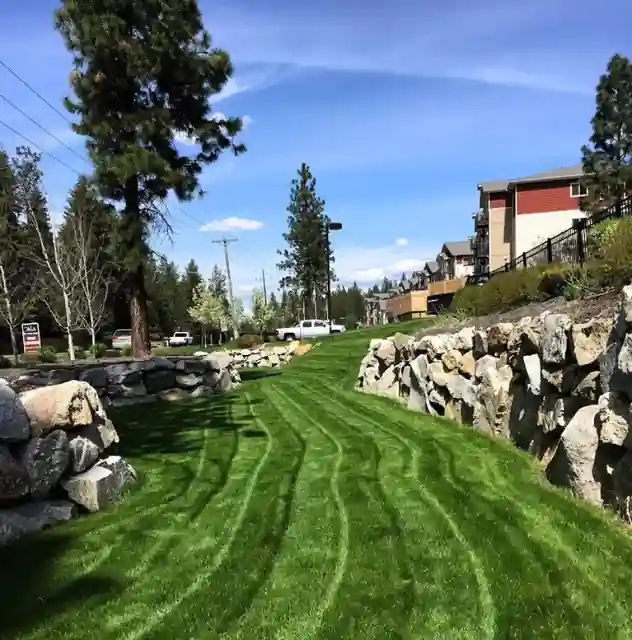
Spring: wake the lawn up
Spring is when you find out how the lawn came through winter. Walk it. Look for thin patches, compacted ground that sheds water instead of soaking it in, and leaves or debris that sat on the turf for months. A spring cleanup clears that debris and gives the lawn a clean start.
Spring is also a good time for aeration and overseeding. Aeration relieves compaction so air, water and nutrients can get down to the roots, and overseeding fills in the thin areas so weeds have less room to move in. Mowing starts back up at 3 1/4 inches, not lower, because a lawn that is just waking up needs its leaf surface.
If you're on a fertilization and weed control program, spring is when it gets going. Our program is six applications across the year, and it includes six fertilizer treatments, five broadleaf weed control treatments, crabgrass control, free unlimited service calls and a weed-free guarantee. Follow-up applications under that guarantee are part of the package at no charge. One thing to know: skipping or cancelling a treatment voids the guarantee, so the schedule matters.
Summer: protect it from heat and traffic
Summer work is about stress prevention. Raise the mowing height to 3.5 to 4 inches. Taller grass shades its own roots and holds up better when the days get hot. Water deep and less often rather than a little every day, since deep watering pushes roots down. A common target is about an inch of water per week, delivered early in the morning or late in the afternoon so less of it evaporates.
This is also the season to watch your sprinklers. A broken head or a leaking valve shows up as a dry brown patch or a soggy spot. Fix it early. A sprinkler problem left alone through July does more harm than almost anything else you could do to the lawn.
Fall: the most important season
If you only do real lawn work once a year, make it fall. The summer wears a lawn down, and fall is when it can recover. Our fall plan is dethatching, aeration, overseeding and a fertilizer treatment. Thatch is the layer of dead stems and roots that builds up between the green grass and the soil. When it gets thicker than 1/2 inch it starts blocking water and nutrients, and that's when we recommend dethatching.
Aeration and overseeding go hand in hand. Aeration opens the soil, and the new seed gets direct contact with it. Together they correct compaction and fill in thin areas before winter slows everything down.
Fall is also cleanup time. Leaves left sitting on the lawn hold moisture against the grass, and that invites mold and disease. We offer leaf removal and disposal, along with fall property cleanups, flower bed cleanups and garden cleanups.
And before the first hard freeze, the sprinkler system needs a blow-out. That's the visit that clears the water out of the lines so they don't freeze and crack. We cover it in detail in our post on blow-outs and start-ups.
Winter: protect and wait
A dormant lawn needs very little, and that's a good thing. The goal is to protect it. Keep the lawn clear of fallen leaves and debris, and stay off it as much as you can when it's frosty, since walking on frozen grass can damage it.
Winter is also when many homeowners think about holiday lighting, and we install Christmas lights from the first strand to the last. You pick warm white, cool white, icy blue or multi-colored, and LED or incandescent. After the holidays we take the lights down on a schedule, and they're coiled, labeled and packed for storage so they last. If you want lights up this December, it's smart to call early in the fall.
Keeping the year on track
Most lawn problems we see aren't mysterious. They come from a missed season: no fall aeration, a late sprinkler repair, mowing too short in July. If you'd rather not keep a calendar in your head, that's what we're for. Call (509) 834-0974 or ask for a free estimate, and we'll build the year around your yard in Yakima, Union Gap, Selah, West Valley, Terrace Heights or Fruitvale.
Yakima's Finest Lawns, (509) 834-0974
Call (509) 834-0974More articles
Why We Mow at 3 1/4 Inches, and Taller in Summer
Our mowing height is a rule, not a mood, and here is the plain reason behind it.
Sprinkler Blow-Out and Spring Start-Up: What Each Visit Does
Two short visits a year protect an irrigation system that costs far more than they do.