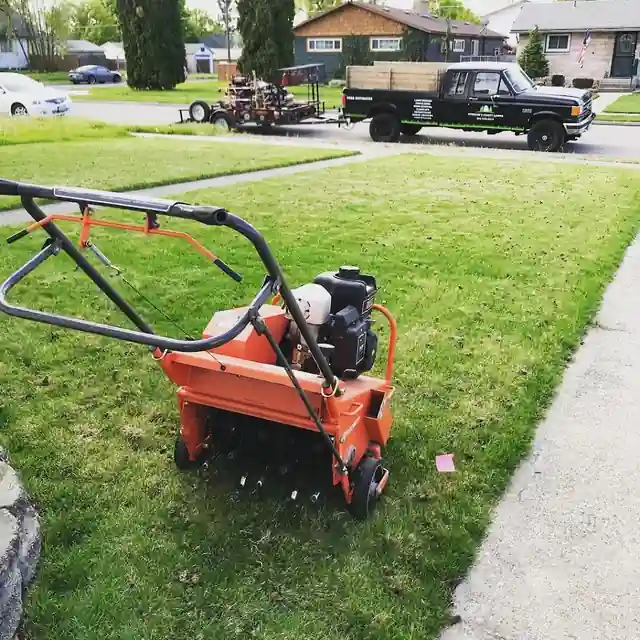
Aerate
Small holes open the soil. Air, water and nutrients finally get to the roots instead of running off the top.
Aeration · dethatching · overseeding
A three-step sequence that opens compacted soil, clears the thatch and fills in thin turf, done in the order that lets each step work.
Chapter 01
Walk the lawn in July. If your screwdriver won't push into the soil and the water runs off the surface instead of sinking in, the ground is compacted. Roots can't spread, air can't reach them, and every dollar you spend on water and fertilizer mostly rolls off to the street.
Then pull back the grass and look at the layer between the green blades and the dirt. A little thatch is normal. Once it gets thicker than half an inch, it turns into a mat that sheds water and starves the crown of the plant. The turf looks tired no matter how often it's mowed.
The last sign is the easiest to see: thin patches and bare spots where the grass quit. Those gaps don't fill themselves. Weeds move in first, and they're happy in compacted soil.
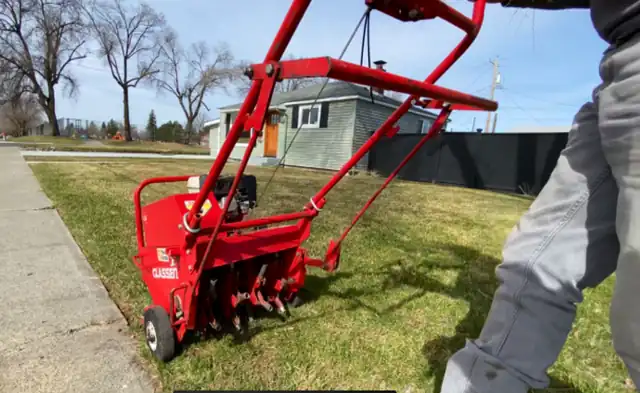
Red core aerator working across a lawn
Our own description of this work is a count to three, and the count matters. It is a sequence of three jobs, not one pass with one machine. Each step sets up the next one.
Core aeration comes first. The machine opens small holes in the soil so air, water and nutrients can get down to the roots. That loosens the compaction that's holding the whole lawn back.
Dethatching comes second. With the soil open, we clear the dense layer of dead grass and debris so the surface can breathe and water can reach the holes you just made.
Overseeding comes last, because new seed needs bare, open contact with soil to take hold. We choose grass varieties that suit Yakima's hot summers and cold winters, then fill in the thin and bare areas so the lawn thickens up. Reverse the order and you bury seed under thatch where it never gets a chance.
Chapter 03
Water the day before. Moist soil lets the aerator pull clean cores, and bone-dry ground fights the machine.
Mark your sprinkler heads and any utilities in the lawn, and clear the yard of hoses, toys and furniture. Anything hidden in the grass is something a machine can hit, so a few flags save a repair bill.
Afterward, the seeded areas want steady moisture. Plan to water more than usual while the seed germinates, and feed the lawn so the new grass has something to work with. Hold off on the mower until about a week has passed, then cut with a sharp blade so the young grass is trimmed, not torn.
Yakima's Finest Lawns. 100% money-back guarantee on our service. Call (509) 834-0974.
The sequence
Small holes open the soil. Air, water and nutrients finally get to the roots instead of running off the top.
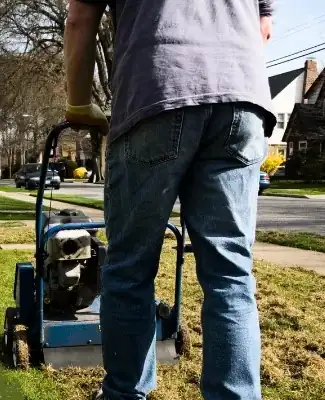
Dead grass and debris come out, so the surface breathes and water reaches the openings you just made.
New grass seed goes down into open soil. Thin spots fill in, the lawn gets denser, and weeds lose their foothold.
Seed goes last on purpose. Put it down before the thatch is cleared and it lands on top of the mat instead of in the soil.